

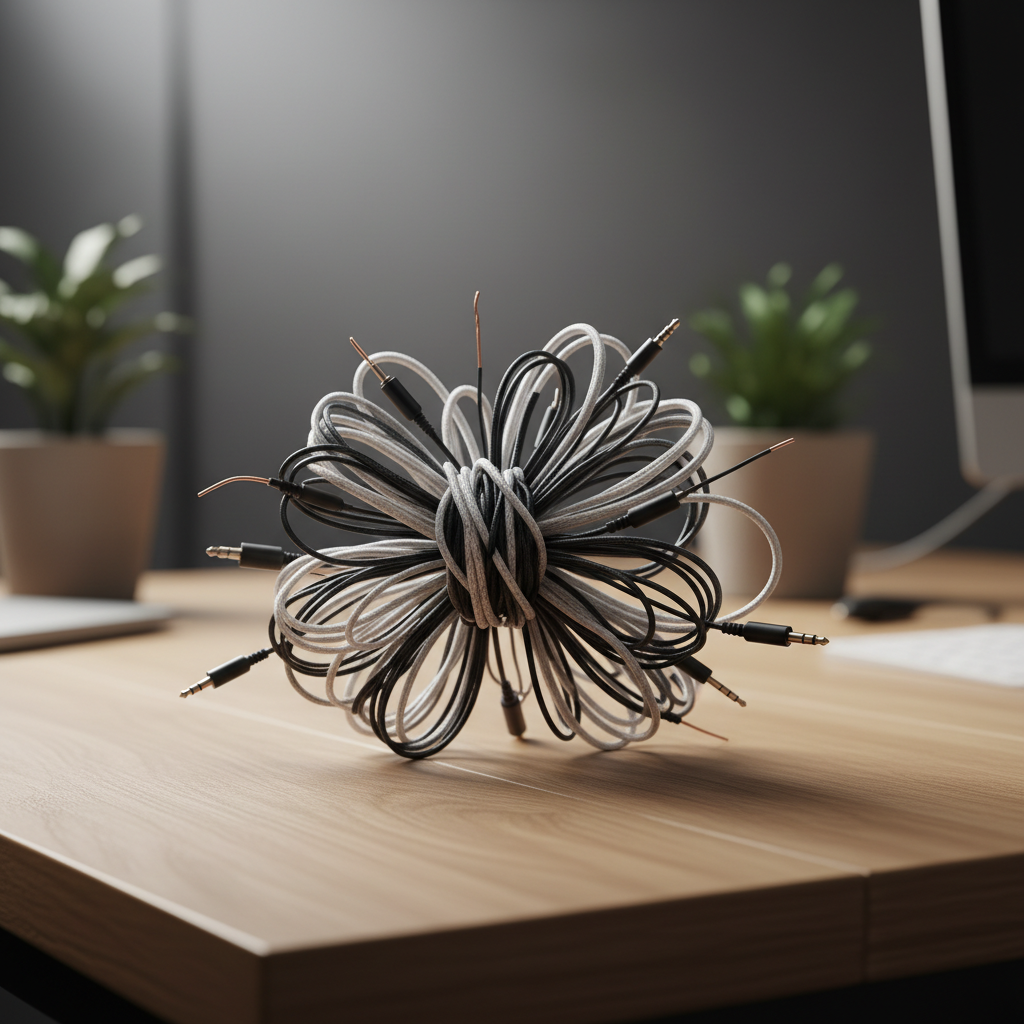
Ah, the sweet symphony of music – until you reach for your headphones and are greeted by a Gordian knot of wires. Or perhaps you’re trying to enjoy your home stereo only to trip over a spaghetti junction of cables. Sound familiar? You’re not alone! Tangled cables and messy setups are a universal frustration for music lovers and audio enthusiasts alike. But fear not, for this guide is here to rescue your listening experience from the clutches of chaos. We’re going to explore practical, even fun, ways to tame your audio cables, protect your gear, and transform your listening space into a haven of organized sound. Even if you’re new to the world of audio, you’ll find easy-to-understand tips, and seasoned listeners might just discover a new trick or two.
The Tangled Truth: Why Cables Become a Mess and How to Prevent It
Understanding why cables tangle is the first step to preventing it. It’s often a combination of gravity, friction, and kinetic energy (movement!). When cables are tossed haphazardly into a bag or coiled incorrectly, their natural twist and memory cause them to interlock. This isn’t just an aesthetic problem; repeated tangling can stress the internal wires, leading to shorts, fraying, and ultimately, a dead cable. The good news? Preventing this is surprisingly simple.
One of the easiest yet most effective techniques is the “over-under” coiling method. Instead of wrapping a cable around your hand in a figure-eight, try this: hold one end, then loop the cable. For the next loop, slightly twist your wrist so the cable goes *under* the previous section, then *over*. This neutralizes the cable’s natural twist, making it lie flat and preventing kinking. This is especially useful for longer instrument cables or power cords. For smaller headphone cables, a simple but careful loop and securing with a Velcro tie works wonders. Avoid wrapping cables too tightly, as this can put unnecessary strain on the connection points – the delicate areas where the wire connects to the plug or device.
Another common mistake is leaving cables exposed to foot traffic or sharp edges. Dust, pet hair, and even sunlight can degrade cable jackets over time. Think about where your cables are run. Can they be tucked behind furniture? Are they dangling where someone might trip? A small adjustment in placement can significantly extend their lifespan.
DIY Solutions and Everyday Organizers: Taming the Wild Wires
You don’t need fancy gadgets to achieve cable nirvana. Many effective solutions are either free, cheap, or already lying around your house. For headphones, especially those with non-detachable cables, consider a simple “headphone wrap.” Start by draping the cable over the top of the earcups. Then, wrap the remaining cable snugly around the headband, securing the plug end through the earcup or under the final wrap. This keeps the cable neat and prevents it from dangling.
For your home music setup, cable ties are your best friend. Velcro cable ties are fantastic because they’re reusable and adjustable, unlike single-use zip ties. Grouping similar cables together (e.g., all power cords, all audio interconnects) makes troubleshooting infinitely easier and vastly improves aesthetics. Cable sleeves or flexible tubing can further encapsulate groups of cables, creating a single, clean conduit from your amplifier to your speakers or other components. You can find these at electronics stores, or even repurpose a flexible plastic conduit from a hardware store.
Got old toilet paper rolls or paper towel tubes? Don’t toss them! They make excellent, eco-friendly organizers for longer cables. Simply coil your cable and slide it into the tube. Labeling each tube with the cable’s purpose (e.g., “HDMI,” “Speaker Wire L”) will save you headaches later. For a more robust DIY solution, a small wooden box with dividers can create individual compartments for different cables, keeping them neatly separated and easily accessible.
Beyond the Coil: Best Practices for a Tidy Sound Sanctuary
Storage is just as important as everyday organization. When not in use, headphones should be stored on a stand or in a protective case. A headphone stand not only keeps your headphones off your desk or floor but also prevents the headband from getting squashed and preserves their natural shape. Many stands also have built-in cable management features, like a hook or groove for coiling the cord.
For your home audio setup, consider the flow of your cables. Routing them along the baseboards or behind furniture makes them disappear into the background. Adhesive cable clips are great for securing cables to surfaces, preventing them from slipping or dangling. For speaker wires, ensure they are of appropriate length – too long and you’ll have excess to coil; too short and you’ll strain connections. When purchasing new cables, consider flat-profile designs, which are often easier to hide under rugs or along walls than round ones.
Finally, a bit of periodic maintenance goes a long way. Every few months, dedicate a few minutes to uncoil, clean, and re-organize your cables. Dust and grime can accumulate, affecting both aesthetics and performance. A quick wipe-down with a microfiber cloth and re-securing loose ties will keep your audio setup looking and sounding its best. By implementing these simple tips, you’ll not only extend the life of your precious audio gear but also create a more enjoyable, clutter-free listening environment, allowing you to truly immerse yourself in the music you love.